Preface
For a long time I couldn’t bring myself to believe the words “Blessed be this birth.” They have circulated as the first thing we are supposed to say at the start of someone’s life, yet to me they always seemed to arrive at their conclusion too quickly. Blessing tends to come before the question and to take its seat before hesitation can. But some beginnings are too complicated for such tidy words—too dark, and sometimes carrying too much silence—when they are set down in front of us. Faced with them, I was always late. I wanted to tell myself, at least, that this lateness might not be coldness or lack but a kind of honesty: a way of holding back hasty praise. So instead of going straight to the words of blessing, I decided to start by doubting the structure of belief that makes those words possible.
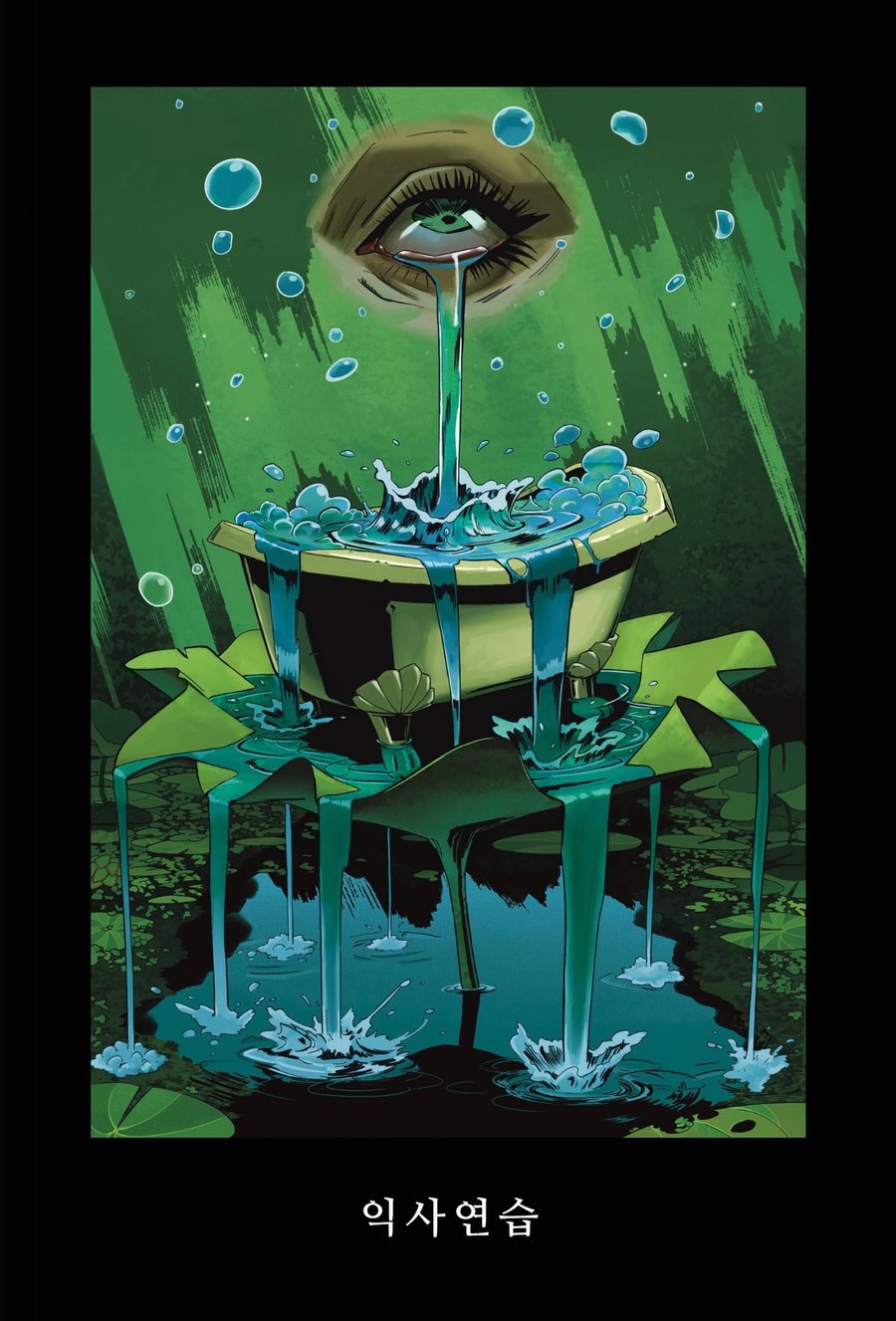
This story began with a handful of images. Faces under white light, trying to read the traces of someone who has not yet arrived. Watermarks left on a riverbank after the monsoon. A little pile of stones placed on an open palm and collapsing almost at once. And two names in an old dictionary of myth: Lethe and Mnemosyne—the water that makes us forget and the water that makes us remember. The longer I looked at those names, the more I came to think that birth might be closer to a kind of bewilderment, something that begins between memory and forgetting before anyone can explain it. Some call it a blessing, some call it fate, and some never manage to name it at all. It was that last case that held me. A feeling that has no name yet; the inner life of someone who, in a room where everyone is speaking of joy, hears alone a tremor of a different kind. That unexplained echo became the oldest seed of this book.
It gradually became clear that what I wanted to write was not an event but a mood. Not the fact that something happened, but the current that lingers long after. The warmth left on the roof of the mouth by words that never made it out. The small, stubborn dissonance that the grammar of blessing can never absorb. I wanted these things to live not at the center of the plot but in the breathing of the sentences. So this book wears the clothes of a novel while borrowing much of the rhythm of a memoir. A memoir is always a form that arrives a little late. It cannot be proclaimed in the middle of things; it can begin only once everything is over. I wanted to trust in the ethics of that lateness—in the grain of feeling that shows only on the far side of what has passed, the edges visible only along the slant of hindsight. This book began as an attempt to feel those edges with my fingertips.
While I was writing, I held on for a long time to the direction of a verb. Between “to be born” and “to be brought into being” there is a crack that looks slight in grammar but is anything but slight in being. The first sounds like a plain statement of fact; the second hints at a force acting on us, a compulsion. “I was born” and “I was made to be born” look almost the same at first glance, but between them the tilt of the world shifts. Responsibility moves to a different place, and our whole sense of how existence begins takes on a slightly different light. I turned that thin difference over and over. The thought that a single verb ending could change the ethics of a sentence, that the slant of a single particle could change the texture of an experience, kept me close to these pages. I know language cannot save the world. But I have not quite given up believing that language can change the way we bear it.
I don’t want to ask readers to take a side. I only want to ask for time. Time, as you turn a page, to look at the fact of your own birth as something strange. Time to doubt, just once, the direction of the verb that has been applied to your life. Time to set aside for a while the things we have accepted as self-evident for far too long—the belief that a beginning must always be a blessing, the habit of praising life before anything else. This book was written for that pause. Not to banish the words of blessing, but out of a wish to trace, slowly, the outline of the shadow that blessing never reached. I want to call these small leftovers a record. A record is always closer to the traces of hesitation than to a finished conclusion.
Looking back, the starting point of this book was less an idea or an ideology than a stance: a way of looking at the world a little longer—with hesitation rather than rapture, by holding on rather than declaring, with a kind of stammer, you might say. My refusal to bless birth unconditionally did not come from any wish to belittle anyone’s life. Quite the opposite. I was afraid that praising life too easily might erase its complexity and the depth of its pain, and that fear is what brought me here. All praise involves some degree of deletion. I wanted to record what had been deleted—the patterns of unexplained sorrow left behind the face of welcome. So this preface is closer to a hesitation than a declaration. But some sentences can only begin at the end of hesitating. This book is a thin thread that happened to catch on my hand as I groped my way toward such a sentence.
You may pull on that thread, or let it go halfway. I only hope you will listen, for a moment, to the faint friction it makes as you wind it around your hand. As on the night I was first caught by this sentence, there are words that make a very small grinding sound in the dark. In Korean, the words for birth and lament—탄생 and 탄식—differ by a single letter, and sometimes a whole book begins in order to rewrite that one letter. This book did that for me. It did not set out from conviction; not knowing how to bless, it hesitated for a long time before it found its first sentence. And so it is a record of the moment when a question put off for too long finally began to take the shape of a sentence.